

This article was originally written in Spanish. Your browser can translate it automatically.
AI can already answer questions, write texts and even solve complex problems. However, there is something that remains difficult for any algorithm to measure. What skills continue to make a difference in higher education?
Artificial intelligence is transforming the way we learn, teach and evaluate. Tools like ChatGPT or Gemini have changed academic dynamics and are forcing institutions to rethink many of their traditional processes.
For years, assessments focused on measuring knowledge, memory and response capacity. But when a tool can generate information in seconds, an inevitable question arises: what should really be evaluated?
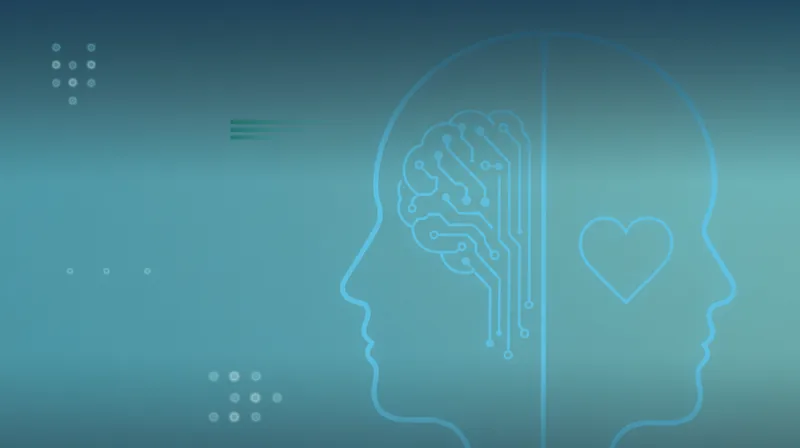
The answer lies not only in technology, but in the skills that remain deeply human — those competencies that allow us to analyze, interpret, question and make decisions in complex contexts.
That is why more and more universities are shifting the focus from correct answers to the ability to apply knowledge, solve problems and build critical thinking.
The skills that continue to make a difference
Artificial intelligence can generate content, summarize information and assist in multiple academic tasks. However, it still encounters limitations when it comes to understanding contexts, interpreting nuances or making reasoned judgments.
That is why skills such as critical thinking, creativity, complex problem solving, effective communication and the ability to argue continue to be highly valued both academically and professionally.
These competencies not only allow technology to be used more intelligently, but also enable us to question its results, identify errors and make informed decisions.
In other words, while AI can provide answers, people remain responsible for asking the best questions.
Evaluating human skills: the great challenge for universities
As artificial intelligence integrates into education, institutions face an increasingly relevant challenge: designing assessments capable of measuring competencies that go beyond memorization or repetition of content.
This means creating more authentic learning experiences, focused on analysis, practical application of knowledge and the resolution of real situations.
The goal is no longer solely to verify what a student knows, but to understand how they think, how they argue and how they use that knowledge to face concrete challenges.
Artificial intelligence will continue to evolve and expand its capabilities. However, human skills will continue to be a differentiating factor in both education and the professional world.
The challenge for institutions will not be to compete against technology, but to find new ways to evaluate what technology cannot yet replace.
At Klarway we accompany universities and educational institutions in building more reliable, secure evaluation processes adapted to the challenges posed by digital transformation.
Subscribe to Educational Outlook
Join the Klarway community and receive technology and education trends directly in your inbox.