
This article was originally written in Spanish. Your browser can translate it automatically.
Artificial Intelligence (AI) is emerging as a determining factor in the evolution of the Latin American education sector. In an increasingly digital environment, AI positions itself as an agent of revolutionary change.
The growing use of AI-based tools not only indicates the drive towards improving the educational experience, but also preparation for meeting the changing demands of the labor market.
In this context, 2024 presents itself as a crucial period, where institutions will continue exploring and applying AI solutions in order to optimize teaching, personalize learning and shape the future of education in the region.
In this article, we will examine how AI helps institutions improve the security of online exams, which represents a major challenge today.
Optimizations for online exam security
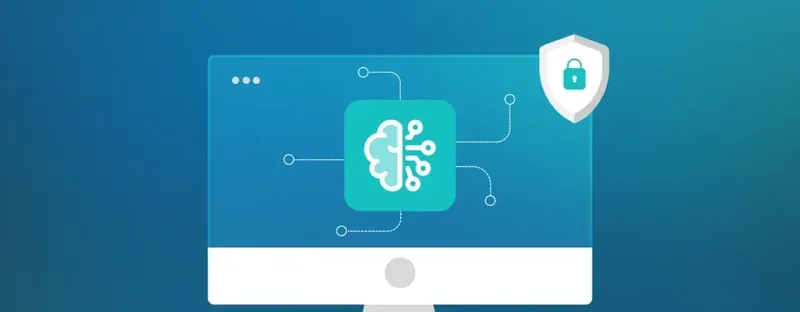
The transition to online assessment presented challenges in terms of integrity and security. A solution that has gained prominence is remote proctoring with artificial intelligence, a revolutionary tool that simplifies the assessment process and strengthens confidence in exams. Let's see more details below.
1. Identity verification
Security begins with verifying the student's identity. Remote proctoring systems use advanced technologies, such as facial recognition and biometric feature comparison, to ensure that the person taking the exam is truly the authorized one. This eliminates the possibility of another person taking an evaluation in place of the registered student.
2. Anomaly detection
The AI employed in remote proctoring solutions has the ability to analyze student behavior during an exam. It detects anomalous patterns, such as unusual movements, distractions, or cheating attempts. This continuous analysis ensures that assessments are conducted fairly and that any suspicious activity is identified and addressed immediately.
3. Prevention of technological cheating
With the advancement of technology, cheating methods have also evolved. However, remote proctoring with AI has the ability to monitor activities in the student's digital environment during the exam. This includes the detection of unauthorized devices, access to non-permitted online resources, and any attempt to use technological cheating tools. Thus, the integrity of the assessment is strengthened.
4. Automated data analysis
One of the advantages of remote proctoring with AI is its ability to analyze data automatically. This makes it possible to determine if an exam shows security alterations and take action against any suspicious behavior or activity, ensuring a solid assessment process while providing reliable results.
In an increasingly digital environment, remote proctoring with AI emerges as a fundamental ally for improving exam security. The implementation of these technologies not only protects the integrity of the assessment process, but also provides educators and students with the peace of mind of a safe and equitable environment.
Tips for AI implementation
Taking into account the contributions made in the "Manifesto for Digital Transformation in Higher Education 1.0", we suggest:
- Strategic approach: the incorporation of artificial intelligence should be a choice aligned with the institutional vision and educational objectives of the establishment.
- Digital culture: promoting training that supports the transition to new scenarios is essential for all stakeholders involved in the educational process.
- Internal collaboration: at this point, it is important to encourage assistance and cooperation between academic and management teams to promote the renewal of processes and practices.
- Institutional innovation: finally, it is also necessary to develop a culture of innovation to adapt to technological and educational changes that may occur.
These suggestions aim to guide Latin American institutions towards a strategic and ethical adoption of AI in the academic field. If you wish, you can access the full Manifesto by clicking here.
Are you interested in learning about the impact of AI on teachers? Go to our article and discover all the details.
Share
Explore more
Subscribe to our newsletter
Receive the latest news about education and technology.
Subscribe to Educational Outlook
Join the Klarway community and receive technology and education trends directly in your inbox.